

US Ambassador Raises Alarm Over Rules Blocking Billions in American Investment in South Africa
South Africa’s relationship with the United States is becoming increasingly tied to a question that sits at the heart of the African country’s economic policy: how to attract foreign capital while continuing to address the deep inequalities left by apartheid.
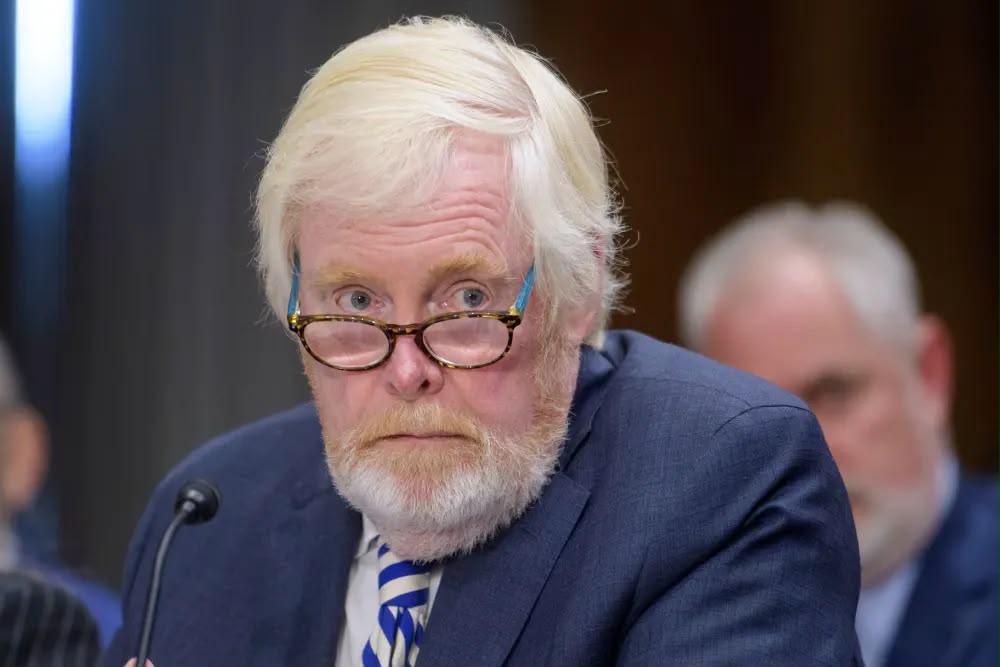
US Ambassador L. Brent Bozell III says billions of dollars in American investment are effectively waiting on the sidelines because of South Africa’s Black economic empowerment requirements, particularly rules affecting ownership in sectors such as mining and telecommunications.
Speaking to local media and the South African Broadcasting Corporation, Bozell said American businesses have substantial capital available for investment but remain cautious about entering the South African market under the current regulatory framework.
“We shake our heads in disbelief that there isn’t a better partnership,” he said, adding that the US is now questioning whether South Africa remains a viable partner.
His remarks underline how economic policy has become entangled with a broader deterioration in relations between South Africa and the United States since early 2025.
South Africa’s Black empowerment framework is rooted in the country’s post-apartheid effort to widen economic participation among the Black majority, which was systematically excluded from significant parts of the economy under apartheid.
The policies have evolved over the years and include requirements and incentives covering ownership, management control, skills development, procurement and enterprise development. Supporters regard them as necessary tools for correcting structural disparities that remain decades after apartheid ended.
The United States, however, has increasingly challenged aspects of the framework, with Bozell specifically identifying mandatory local equity transfers in mining and telecommunications as obstacles to American investment.
The disagreement creates a difficult economic calculation for South Africa.
South Africa needs foreign direct investment to support growth, create jobs and expand productive capacity. At the same time, relaxing empowerment requirements could provoke domestic criticism from groups that argue the benefits of economic growth have not been distributed broadly enough.
The mining sector illustrates the tension particularly clearly.
South Africa remains a major producer of platinum group metals, including platinum, palladium and rhodium. These minerals are important to several industrial applications and are strategically significant to the global economy.
That gives South Africa an asset it can use in its efforts to repair relations with Washington. The United States has an interest in secure supplies of critical minerals, while South Africa wants to maintain access to American markets, capital and technology.
The challenge is that mineral wealth alone may not resolve the political disagreements between the two governments.
The United States has also raised concerns over property rights, rural safety and South Africa’s foreign-policy positions. Those disputes have increasingly spilled into diplomatic and economic relations.
The latest escalation came when the Trump administration imposed visa restrictions on unspecified South African officials accused of involvement in what the US described as “government-sponsored” discrimination.
Bozell indicated that the visa restrictions could be followed by additional measures, suggesting that the dispute is not limited to investment policy.
South Africa’s potential economic consequences extend beyond American companies. If tensions with Washington deepen, uncertainty surrounding the investment environment could affect how other international investors assess the country.
Yet there is also a broader strategic issue at play.
The United States wants stronger access to critical minerals and greater commercial engagement across Africa, while South Africa is seeking to preserve its policy independence and its approach to correcting historical economic exclusion.
That leaves both sides with incentives to find common ground, particularly in mining, manufacturing, technology and infrastructure.
The immediate dispute, therefore, is bigger than whether American companies are willing to invest under Black empowerment rules. It reflects competing views about what a modern economic partnership should look like.
South Africa wants foreign capital without abandoning the principles underpinning economic transformation. The US wants a regulatory environment it considers predictable and open enough to justify large-scale investment.
With billions of dollars in American capital reportedly available and South Africa holding mineral resources of strategic importance, the cost of failing to bridge that gap could extend well beyond diplomatic disagreements.