

Dangote Partners Ethiopia, Djibouti for $660m Fuel Pipeline
Ethiopia, Djibouti and Nigerian industrialist Aliko Dangote are moving to deepen their cooperation in the energy sector with plans for a $660 million refined petroleum pipeline linking the two countries.
The project, announced during Ethiopian Prime Minister Abiy Ahmed’s visit to Djibouti, is expected to address some of the logistical challenges that have long affected the movement and storage of petroleum products along one of East Africa’s most important trade corridors.
According to a spokesperson in Abiy’s office who spoke with Reuters, the development will involve a 120-kilometre pipeline connecting Ethiopia and Djibouti. It will also include major storage facilities, with about 375,000 cubic metres of capacity planned for Damerjog in Djibouti and another 800,000 cubic metres at Dewele in Ethiopia.
The infrastructure is expected to become operational within 18 months.
Abiy said on X that the project would be developed through a partnership between Ethiopian Investment Holdings and Dangote Group, adding another major investment to the Nigerian billionaire’s growing footprint in Ethiopia.
The immediate objective is straightforward: make the movement of refined petroleum products between Djibouti and Ethiopia faster, more reliable and less expensive.
The Ethiopia-Djibouti corridor is particularly important because Ethiopia, a landlocked country, relies heavily on Djibouti for access to maritime trade. Much of the country’s imports pass through Djibouti’s port infrastructure before being transported inland.
That dependence makes the efficiency of the corridor an important economic issue. Delays, congestion, road transportation costs and storage constraints can increase the final cost of fuel and other imported commodities.
A dedicated petroleum pipeline could therefore change how refined products move between the two countries.
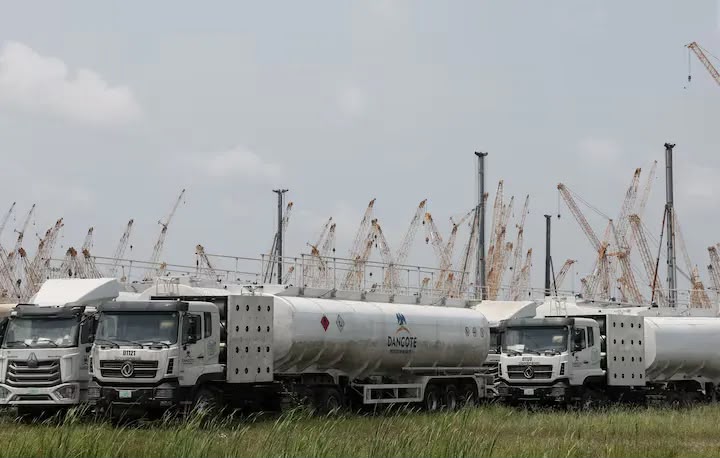
Rather than relying as heavily on road tankers for long-distance transportation, petroleum products could be transferred through a purpose-built network and stored closer to major points of demand. The additional storage capacity could also give the two countries more flexibility in managing fluctuations in supply.
Ethiopia views the project as having a wider strategic dimension.
The country has one of Africa’s largest populations but remains heavily dependent on imported petroleum products. Strengthening infrastructure around fuel transportation and storage could help reduce vulnerabilities created by disruptions along the supply chain.
Abiy said the project was intended to reduce logistics costs and delays along the Ethiopia-Djibouti transport corridor. He also said the infrastructure would strengthen energy security and improve supply-chain resilience.
The agreement also illustrates the expanding relationship between Ethiopia and Dangote Group.
Dangote is already involved in several large-scale projects in Ethiopia, including a separate $4 billion fertiliser pipeline and power plant, as well as a polypropylene packaging facility. The petroleum pipeline consequently forms part of a broader pattern of industrial investment rather than standing alone as an isolated energy project.
Dangote’s involvement is also significant because the billionaire has been building an increasingly regional business presence across Africa, particularly in sectors such as energy, manufacturing and infrastructure.
The latest project comes as the businessman prepares for another major petroleum investment in East Africa.
In Kenya, Dangote and the government are expected to break ground next week on a proposed 700,000-barrel-per-day crude oil refinery in Lamu. If the project proceeds as planned, it would represent another substantial expansion of Dangote’s role in Africa’s energy infrastructure.
Taken together, the developments point to a broader shift in the continent’s energy landscape, where private capital is increasingly being linked with national infrastructure strategies.
The success of the $660 million pipeline in Ethiopia and Djibouti, however, will ultimately depend on execution. An 18-month timeline is ambitious for a project involving cross-border construction, large storage terminals, and coordination between multiple governments and private-sector interests.
If completed on schedule, the pipeline could become an important piece of infrastructure for the Ethiopia-Djibouti corridor, reducing dependence on road-based fuel transportation while giving both countries greater capacity to manage petroleum supplies.
More broadly, the project reflects an attempt to treat energy security not simply as a question of securing fuel, but also of building the infrastructure needed to move and store it efficiently.