
Dangote Reveals Plans to List Fertiliser Business in 2027
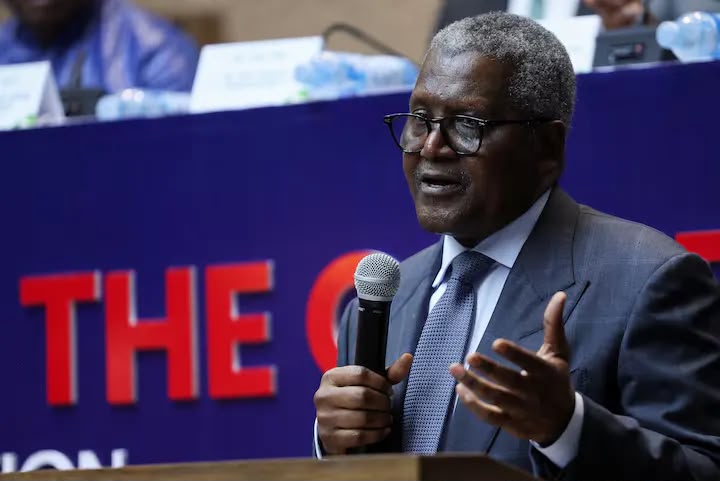
Aliko Dangote has signaled plans to take his fertiliser business to the stock market next year, a move that could broaden public ownership of one of the Nigerian conglomerate’s major industrial operations and deepen the group’s presence in Africa’s capital markets.
Speaking at an investors’ meeting at the Nairobi Securities Exchange on Tuesday, the Nigerian businessman said Dangote Fertiliser Ltd could be listed sometime in 2027.
“Sometime next year we hope to list it. Let it be owned by the people,” Dangote told investors, according to Reuters.
The proposed listing would give investors an opportunity to take direct stakes in the fertiliser business, while potentially providing the company with access to additional capital as it pursues an ambitious expansion programme.
Fertiliser expansion takes center stage
Dangote Fertiliser is already positioned as a major component of the group’s strategy to strengthen agricultural inputs and industrial production across Africa. The company now plans to expand its manufacturing capacity significantly, with six production lines targeted for development.
According to Dangote, deliveries from the planned expansion are expected between late 2028 and early 2029. Once the additional production lines are operational, the company is targeting annual fertiliser output of about 12 million metric tons.
That scale would give the business a substantially larger production base and could strengthen its ability to serve markets beyond Nigeria.
Fertiliser remains strategically important for African economies because of its direct connection to food production. Many countries on the continent continue to rely on imported agricultural inputs, leaving farmers exposed to international prices, supply disruptions and currency pressures.
Dangote’s expansion into fertiliser production therefore forms part of a broader industrial strategy that connects manufacturing with sectors considered critical to Africa’s economic development.
The proposed stock-market listing could also represent a significant shift in how the fertiliser operation is financed and owned. Rather than remaining entirely within the privately controlled Dangote Group, a public listing would allow institutional and individual investors to participate in the company’s future growth.
Dangote’s comment that he wants the company to “be owned by the people” points to a wider ambition of bringing Nigerian and African investors into businesses that have traditionally been controlled by large private capital.
Expansion beyond fertiliser
Dangote’s appearance in Nairobi comes as his business interests continue to expand across energy, manufacturing and logistics.
He was speaking ahead of a groundbreaking ceremony in Lamu, Kenya, for a planned oil refinery with a proposed capacity of 700,000 barrels per day.
The scale of the planned refinery places it among the most ambitious energy projects associated with the Dangote Group and reflects the businessman’s continuing push to build large industrial assets outside Nigeria.
The Lamu project also comes at a time when African countries are seeking greater domestic refining capacity and reduced dependence on imported petroleum products. If implemented as planned, a refinery of that size could have implications for regional fuel supply and trade, although the project’s eventual impact will depend on construction, financing, infrastructure and market conditions.
Dangote also disclosed that his group had opened a new shipping unit, adding another layer to an increasingly diversified business empire.
The move into shipping is particularly relevant to a group whose operations involve the movement of raw materials, finished products and energy commodities across borders. Greater control over logistics could potentially support the group’s expanding industrial operations and reduce some of the constraints associated with third-party transportation.
A bigger African industrial footprint
Taken together, the fertiliser expansion, proposed stock-market listing, refinery plans and new shipping operation illustrate the breadth of Dangote’s current business strategy.
The fertiliser listing, if completed in 2027, would be closely watched by investors because it could provide a clearer market valuation of one of the group’s key businesses while creating a new investment opportunity.
But the more significant question may be what happens after the listing. Dangote Fertiliser’s proposed six production lines and 12-million-tonne annual target require substantial investment and successful execution over several years.
Investors will likely look beyond the initial public offering and focus on whether the company can deliver its expansion timetable, maintain efficient production and compete effectively in African and international fertiliser markets. Those factors will ultimately shape the long-term value of the proposed listing.
Dangote’s broader strategy is equally clear. The group is continuing to build businesses on a scale intended not only to serve Nigeria, but also to strengthen its position across Africa’s increasingly interconnected industrial and commodity markets.