


Singapore’s S$80 Million Vertical Farm Faces a Tough Test: Can It Beat Imported Produce on Price?
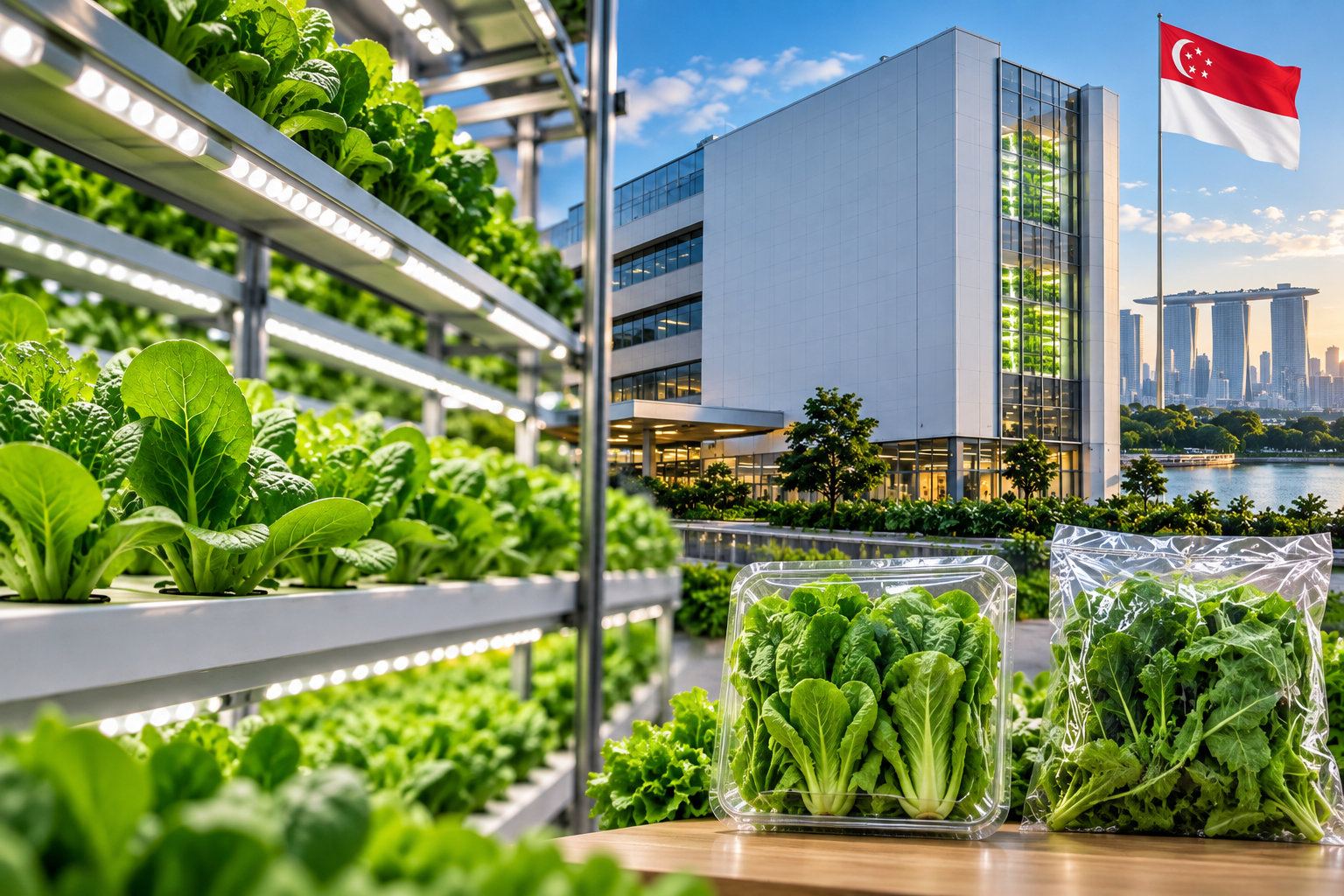
Singapore’s ambitious push into high-tech agriculture is facing a basic commercial question: can locally grown vegetables compete with cheaper imports?
The issue has come into sharper focus following the opening of Greenphyto’s S$80 million indoor vertical farm in Jurong. The five-storey facility stands about 23.3 metres tall and is designed to produce up to 2,000 tonnes of vegetables a year when operating at full capacity. Its first-year target is around 200 tonnes.
The farm uses controlled indoor growing systems, automation and technology to increase production from a relatively small land footprint. Its vegetables are already being sold through major supermarket chains, including FairPrice and Sheng Siong.
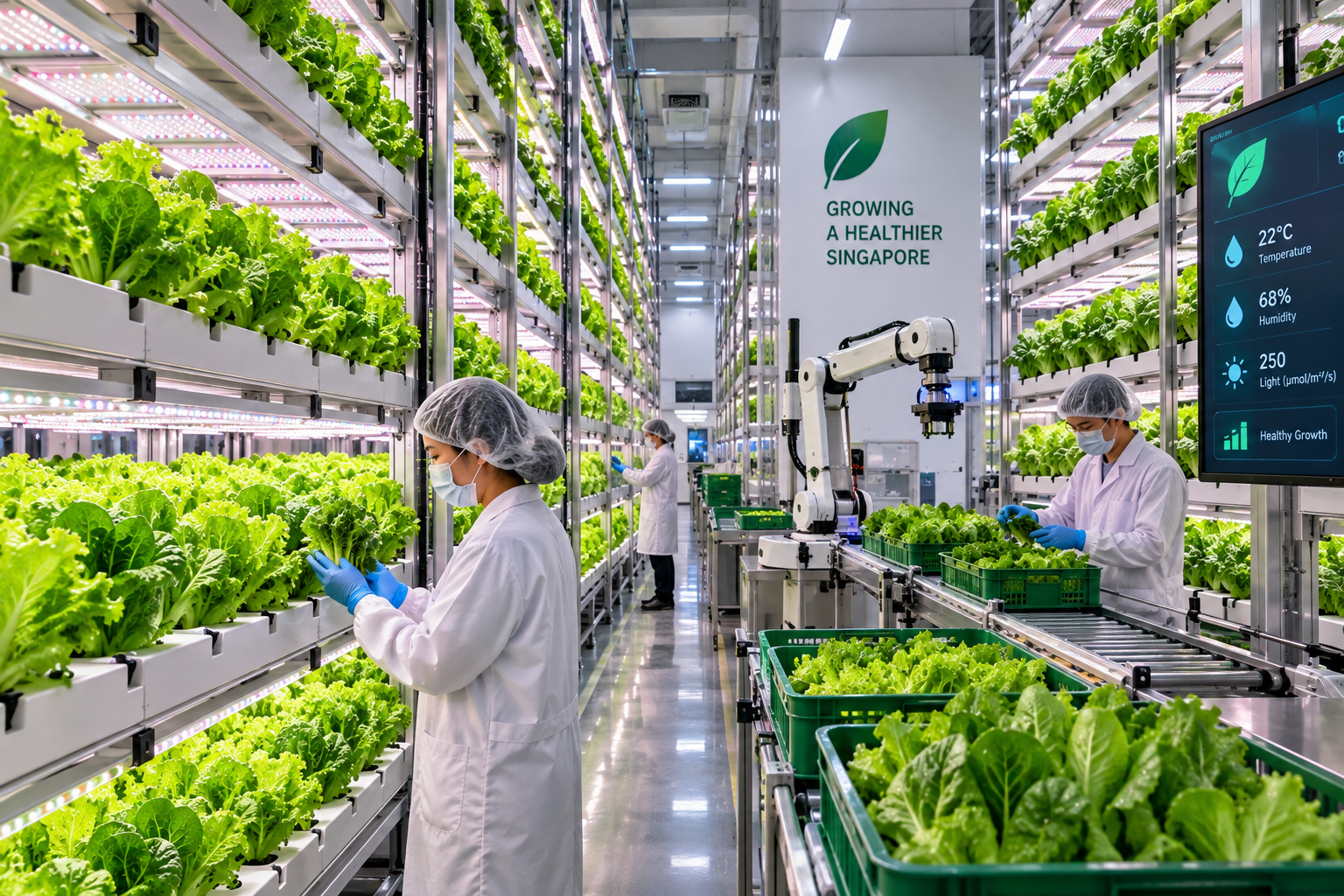 But technology alone may not determine whether the business succeeds. Cost is the central challenge. Singapore imports most of its food, meaning local farms must compete against overseas producers that can benefit from cheaper land, labour and other production costs.
The Business Times report highlights a particularly important benchmark: whether local farmers can close a roughly 50-cent price gap with imported vegetables by offering products that consumers are willing to pay more for. That could involve fresher produce, stronger local branding, reliability of supply and other advantages.
Singapore’s latest farmland tender results also show how difficult the economics of farming remain. Two vegetable-growing plots offered in 2026 attracted only five bidders in total, while the Lim Chu Kang site received just one bid.
The government is nevertheless continuing to support the sector. The Singapore Food Agency has introduced longer development and production timelines for new farms, giving operators more time to construct facilities and establish customers before reaching their planned output.
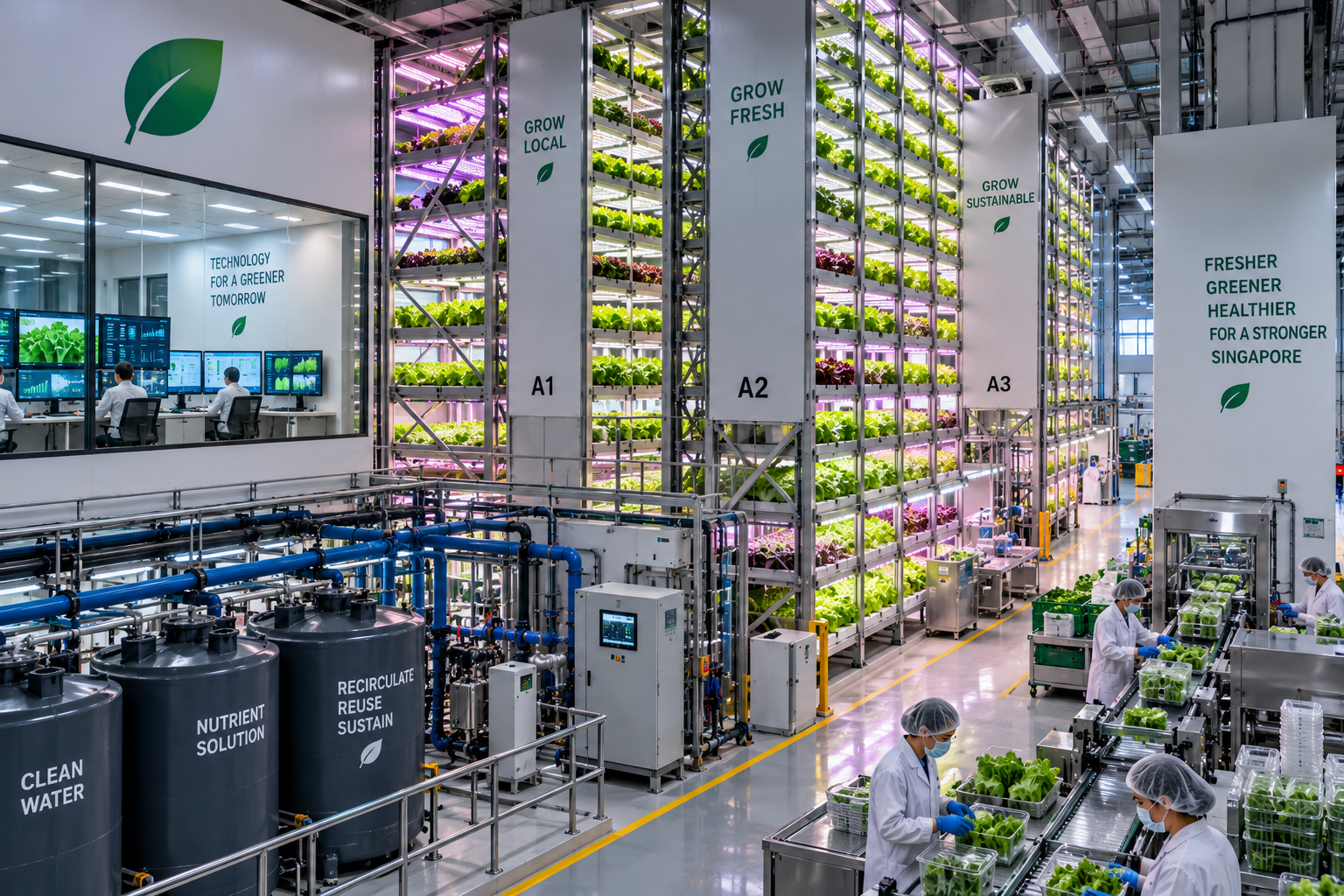 Singapore is also providing financial support for local agriculture. In March, the government announced S$70 million over five years to help farms increase production, adopt technology and strengthen their capabilities.
For Greenphyto, scaling up production will be critical. A facility designed for 2,000 tonnes annually needs sufficient sales volume and efficient operations to justify its substantial investment.
The bigger question is whether Singapore’s vertical-farming model can demonstrate that high-tech agriculture can become commercially competitive rather than simply technologically impressive.
If the new generation of farms can lower production costs while maintaining quality and securing supermarket demand, they could play a larger role in Singapore’s food-resilience strategy. But if imported vegetables remain significantly cheaper, even advanced farms may struggle to achieve sustainable profits.