


DR Congo, Angola Seal Railway Deal as US and China Battle for Africa’s Critical Minerals
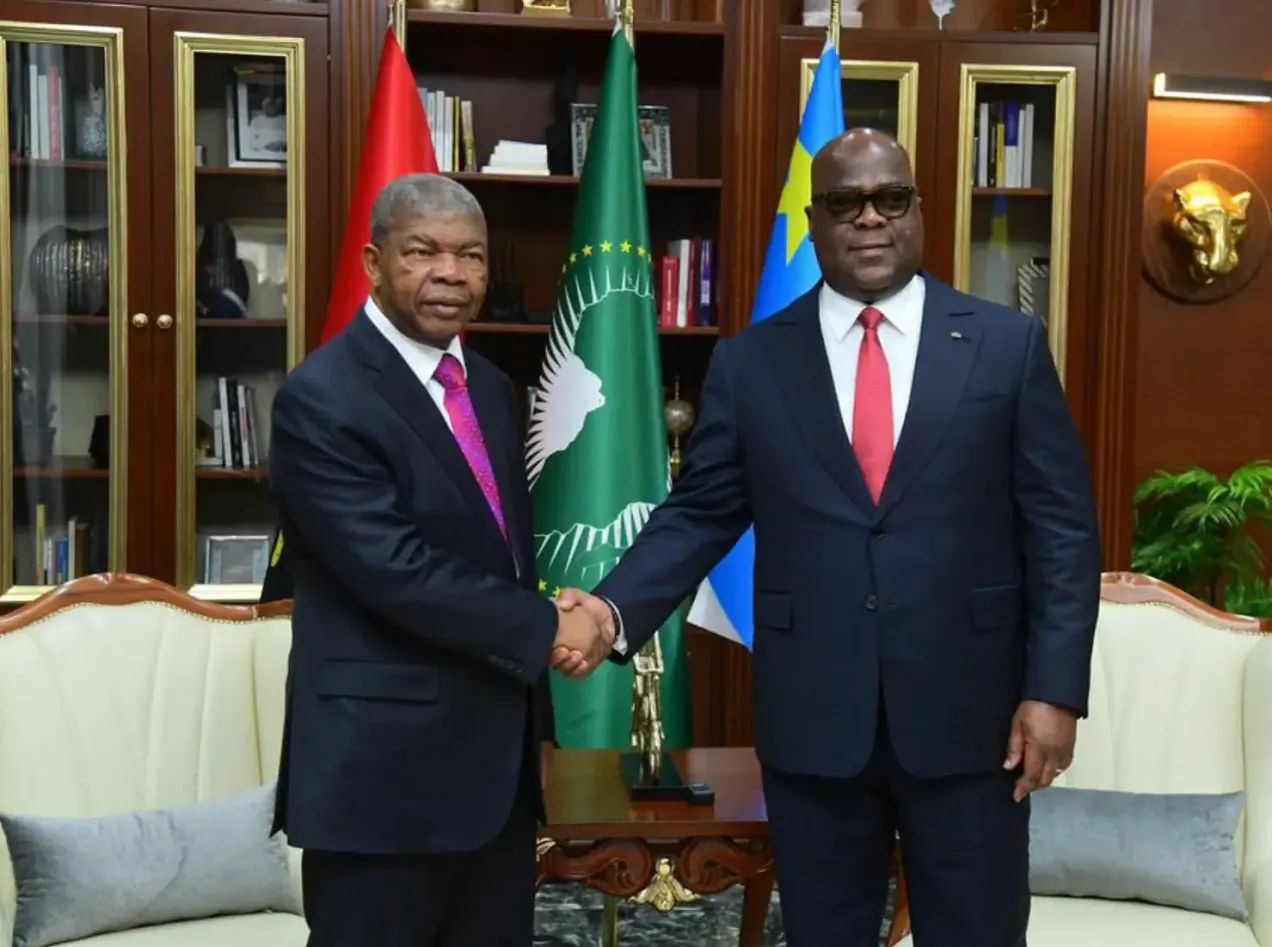
A new railway agreement between the Democratic Republic of Congo and Angola is placing the Lobito Corridor at the heart of a widening geopolitical contest over Africa’s critical mineral wealth.
The reported US-backed arrangement is designed to strengthen the rail connection between mineral-producing areas of DR Congo and Angola’s Atlantic ports, giving exporters a faster alternative for moving copper, cobalt and other strategic resources to international markets.
The significance of the deal extends well beyond transportation. At a time when the United States and China are competing for influence over the supply chains that will underpin electric vehicles, renewable energy systems and advanced technologies, control of mineral routes is becoming almost as important as control of the mines themselves.
The Lobito Corridor offers a particularly attractive opportunity because it connects the mineral-rich Copperbelt of southern DR Congo and Zambia to the Atlantic Ocean through Angola. For producers, the route could address one of the biggest obstacles facing African mining: the enormous cost and time involved in getting minerals from inland mines to ports.
Industry experts estimate that a fully functioning corridor could reduce journeys that currently take as long as 30 days to roughly a week or less.
That reduction would have major commercial consequences. Faster transportation means lower inventory costs, fewer delays and potentially greater competitiveness for African minerals in global markets. It could also make the region more attractive to investors looking beyond the extraction of raw materials towards processing and manufacturing.
But the railway project is also emerging as a strategic instrument in Washington’s effort to reduce China’s dominance of DR Congo’s mining sector.
A recent report from the US National Geospatial-Intelligence Agency reportedly found that Chinese companies control 72% of copper and cobalt mines in DR Congo. That level of involvement gives Beijing considerable influence over two minerals that have become increasingly important to the global energy transition.
Cobalt is widely used in rechargeable batteries, while copper is indispensable to electricity grids, electric vehicles, renewable energy infrastructure and data centers. Demand for both is expected to remain significant as countries invest in electrification and technological infrastructure.
The United States, therefore, sees expanding the Lobito Corridor as more than simply an infrastructure investment. It is part of a broader attempt to establish alternative supply chains for minerals that the United States considers strategically important.
The Trump administration has proposed investing as much as $1 billion in the corridor and other related infrastructure projects. Such financing could give the United States a stronger economic presence in a region where Chinese companies have spent years building relationships through mining, infrastructure and trade.
Yet the competition presents a difficult question for African governments: how can they turn geopolitical rivalry into long-term economic gains rather than simply becoming the arena in which powerful countries compete?
Improved rail infrastructure could generate substantial benefits for DR Congo and Angola if it is accompanied by transparent contracts, local employment, industrial development and investment in mineral processing. Simply exporting larger quantities of unprocessed ore more quickly would improve logistics without necessarily transforming the structure of their economies.
The corridor could also strengthen Angola’s position as a regional logistics hub. Its Atlantic ports offer a route to global markets that avoids some of the bottlenecks associated with alternative transport networks. For landlocked Zambia, the corridor could eventually provide another important export option.
The bigger test, however, will be whether the railway develops into more than a minerals highway.
If governments can use the corridor to attract processing plants, manufacturing businesses and supporting industries, the project could help shift parts of the region from an extractive model towards greater value addition. If that fails, the infrastructure could primarily serve international demand for raw materials.
The DR Congo-Angola agreement therefore represents both an infrastructure opportunity and a geopolitical wager. The United States wants a stronger foothold in Africa’s critical-minerals supply chains, while China already has a commanding position in DR Congo’s mining industry.
The Lobito Corridor could become the physical link connecting Africa’s mineral wealth to the Atlantic. Whether it ultimately becomes a pathway to broader African industrialization or simply a faster route for exporting raw materials will depend on the economic choices made along the railway.