

Influencer marketing industry was at roughly $32.6 billion in 2025.
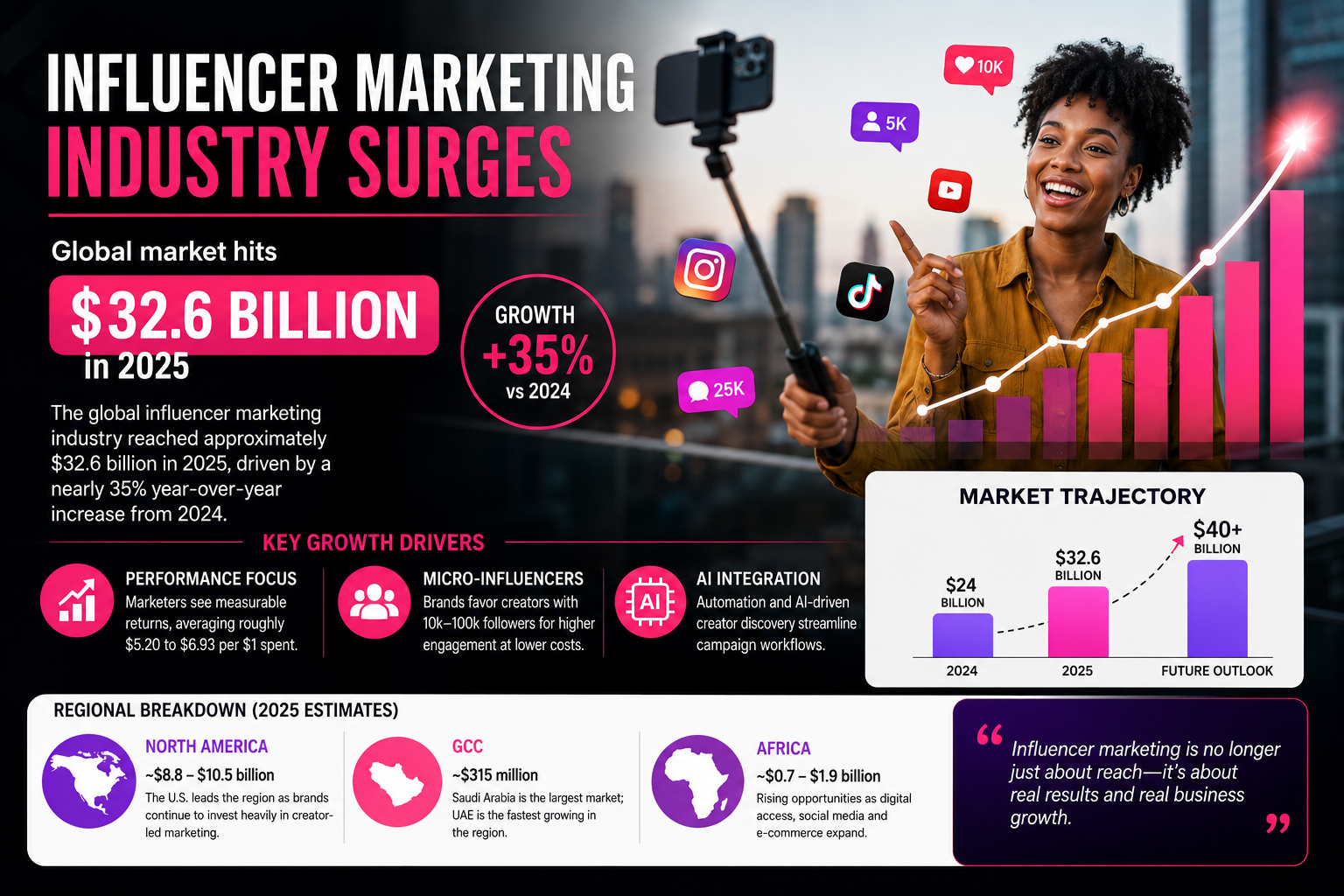
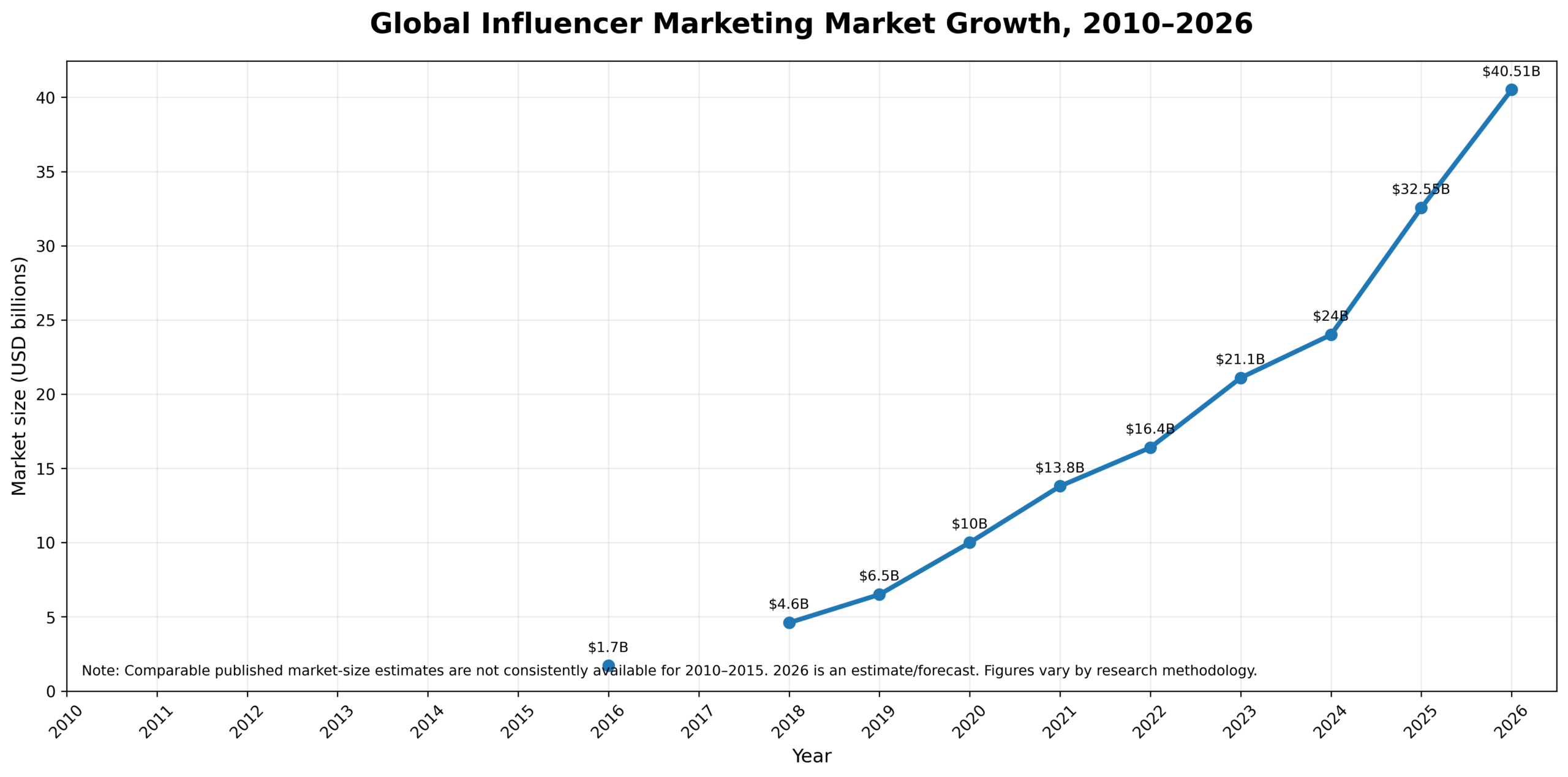
The global influencer marketing industry continued its rapid expansion in 2025, with the market estimated at around $32.6 billion, up significantly from approximately $24 billion in 2024.
The growth highlights how social-media creators have moved beyond being used mainly for promotional campaigns and are increasingly becoming an important part of how companies reach consumers, launch products and generate sales.
Market estimates from Influencer Marketing Hub put the global industry at about $32.55 billion in 2025, representing growth of roughly 35% from the previous year. Statista separately estimated the market at approximately $33 billion for 2025.
Why the Market Is Growing
One of the biggest changes is the growing focus on measurable results.
Companies are increasingly looking at influencer campaigns not simply for likes and views but also for website visits, product purchases, leads and other measurable outcomes. Some industry estimates suggest brands can generate several dollars in value for every dollar invested, although actual returns vary considerably by campaign, creator and industry.
Another major trend is the growing popularity of micro-influencers. These creators typically have smaller audiences but can have strong relationships with specific communities. This makes them attractive to brands looking for targeted audiences and potentially stronger engagement.
Artificial intelligence is also changing the way influencer campaigns are managed. AI-powered tools can help marketers discover creators, analyse audiences, organise campaigns and measure performance more efficiently.
Regional Breakdown
North America
North America remains one of the world’s most developed influencer-marketing markets.
Research from Fortune Business Insights estimates that the North American influencer marketing platform market was worth about $8.77 billion in 2025, representing around 37% of the global platform market in that particular study. Another market analysis from Grand View Research puts North America’s share of the influencer marketing platform market at about 31% in 2025.
The United States is a major driver of the region. eMarketer estimated that U.S. influencer marketing spending reached approximately $10.52 billion in 2025, reflecting continued investment by brands in creator-led advertising.
Instagram, YouTube and TikTok remain important channels, while brands are increasingly connecting influencer campaigns with paid advertising, online shopping and performance marketing.
GCC
The Gulf Cooperation Council is becoming an increasingly important influencer market, particularly in Saudi Arabia and the United Arab Emirates.
A 2025 market estimate valued the GCC influencer marketing industry at approximately $315.5 million, with projections putting the market at about $771.6 million by 2032. Saudi Arabia was identified as the largest GCC market, while the UAE was described as the fastest-growing.
The GCC’s young, digitally active population and high social-media usage are helping brands build creator-led campaigns around fashion, beauty, tourism, entertainment, retail and technology.
Research published on social media in the Middle East and North Africa also reported that the GCC creator economy had grown by 75% over two years, with about 263,000 professional influencers operating across the Gulf states.
Africa
Africa is also becoming an important part of the wider creator economy as smartphone ownership, internet access, social-media usage and digital commerce continue to expand.
Regional market estimates vary significantly depending on whether researchers measure influencer marketing itself, influencer-marketing platforms or broader creator-economy activity. One 2025 market analysis estimated the wider Middle East and Africa influencer marketing platform market at about $1.89 billion, while another estimated the Middle East and Africa platform segment at $0.77 billion. These differences show why regional figures should be treated as estimates rather than directly comparable totals.
 Countries including Nigeria, South Africa, Egypt, Ghana and Kenya are developing increasingly active creator communities. Local-language content, entertainment, fashion, sports, financial services and e-commerce are among the areas where creators can help brands reach highly targeted audiences.
For African businesses, influencer marketing can also provide a way to reach consumers without relying entirely on traditional advertising channels.
From Followers to Business Results
The influencer industry is gradually becoming more performance-driven.
Brands are increasingly asking creators to help generate concrete business outcomes, including:
- Product sales
- Website traffic
- App downloads
- Customer leads
- Brand awareness
- Online engagement
- Social-commerce transactions
This means the future of influencer marketing may depend less on the number of followers a creator has and more on whether that creator can reach the right audience and produce measurable results.
What Comes Next?
The industry is expected to continue expanding as companies shift more advertising budgets toward digital creators and social commerce.
AI, short-form video, live shopping and increasingly sophisticated analytics are likely to play a major role in the next stage of development.
For creators, the growing market presents new opportunities to turn audiences into sustainable businesses. For brands, it creates a larger pool of creators and new ways to reach consumers.
At roughly $32.6 billion in 2025, influencer marketing has already become a major global advertising business. The next phase will likely be defined by better measurement, stronger creator-brand partnerships and a greater focus on converting online influence into real business results.