


Siemens Mobile: The Rise and Fall of a German Phone Pioneer
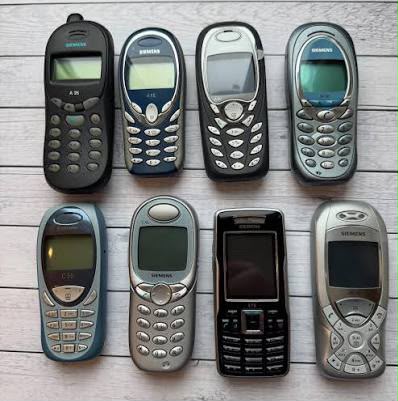
Before Apple, Samsung and Xiaomi dominated the smartphone market, Siemens was one of the most recognisable names in mobile phones.
The German company built a reputation for durable handsets, practical designs and innovative features. Its phones were popular across Europe, Africa and other international markets, particularly during the late 1990s and early 2000s.
However, Siemens Mobile eventually struggled to compete with Nokia, Motorola, Samsung and other faster-moving rivals. In 2005, Siemens sold its mobile-phone division to Taiwan’s BenQ. The business later collapsed, bringing the Siemens Mobile era to an end.
The early years
Siemens entered the mobile-phone industry in the 1980s. Its first mobile phone, the Siemens Mobiltelefon C1, was launched in 1985.
The company later introduced GSM phones as mobile communication expanded across Europe and other regions. Siemens became known for building solid and reliable handsets for both business users and ordinary consumers.
In 1994, the company launched the Siemens S1 GSM phone. Three years later, it introduced the Siemens S10, widely regarded as the first mobile phone with a colour display.
The S10 could display four colours: red, green, blue and white. By today’s standards, the technology was extremely limited, but at the time it represented a major step forward.
Popular Siemens models
Siemens produced more than 100 mobile-phone models during its active years.
The C35 became popular because of its simple design, reliable performance and accessibility. The S35 appealed to business users, while the M35 was promoted as a more durable handset.
The SL45 was another important model. Released around 2000, it was among the first phones to support MP3 playback and removable memory through a multimedia card.
The device was slim, stylish and advanced for its time. It helped establish Siemens as a company capable of combining practical communication with entertainment features.
The Siemens S55 was also notable because it supported photography through a separately sold camera attachment. Other models, including the SX1, introduced more unusual designs and smartphone-like functions.
Innovation and unusual designs
Siemens did not always follow conventional phone design.
The company experimented with slim sliders, unusual key layouts, business-focused devices and multimedia handsets. Its Xelibri line, for example, featured fashion-oriented phones designed to look more like accessories than traditional mobile devices.
The Siemens SX1 also stood out because of its unusual circular arrangement of side keys. It ran on the Symbian operating system and offered features that were advanced for the early smartphone era.
These experiments demonstrated Siemens’ willingness to take risks. However, not every design was commercially successful.
Siemens at its peak
By the late 1990s and early 2000s, Siemens Mobile was one of the world’s largest phone manufacturers.
The company benefited from the rapid expansion of mobile networks and the growing demand for affordable handsets.
Its phones were valued for their engineering quality, battery life and practical features. Siemens also benefited from its broader reputation as a respected German technology and industrial company.
At its height, Siemens was considered one of the leading manufacturers behind Nokia, Motorola and Ericsson.
The market began to change
The mobile-phone market became increasingly competitive in the early 2000s.
Consumers began demanding colour screens, cameras, internet access, music playback, better software and more attractive designs. Nokia was expanding rapidly, while Samsung and Motorola were becoming stronger competitors.
Siemens struggled to respond quickly enough.
Some of its phones were technically capable but lacked the marketing strength and user-friendly software offered by competitors. The company also faced difficulties managing its product range and keeping pace with the speed of innovation.
The mobile-phone industry was changing from a market focused mainly on calls and text messages into one driven by multimedia, software and internet services.
Financial losses
By 2004 and 2005, Siemens Mobile was experiencing significant financial problems.
The division was losing money while competitors were reducing prices and releasing new products more quickly. Siemens, whose main businesses were in industrial technology, energy, healthcare and infrastructure, faced increasing pressure to withdraw from mobile phones.
The handset division required substantial investment to remain competitive. Siemens eventually decided that selling the business was preferable to continuing to absorb losses.
The BenQ takeover
In 2005, Siemens sold its mobile-phone division to BenQ, a Taiwanese electronics company.
The business became known as BenQ Mobile, with phones initially marketed under the BenQ-Siemens name. The agreement was expected to combine Siemens’ mobile-phone expertise and brand recognition with BenQ’s manufacturing and consumer-electronics experience.
However, the partnership did not succeed.
The combined business struggled with weak sales, intense competition and continued financial losses. In 2006, BenQ Mobile filed for insolvency in Germany.
The collapse affected thousands of employees and effectively ended one of Germany’s most important mobile-phone brands.
Why Siemens Mobile failed
Several factors contributed to the decline of Siemens Mobile.
First, the company struggled to keep pace with the rapid development of mobile technology. Competitors were often faster in introducing cameras, colour displays, internet features and better software.
Second, Siemens faced strong competition from companies with clearer consumer-focused strategies. Nokia had a powerful global distribution network, while Samsung invested heavily in design and product variety.
Third, Siemens’ mobile division suffered from financial pressure and internal challenges. The company’s broader industrial structure may have made it harder to respond with the speed required in the consumer-phone market.
Finally, the sale to BenQ came when the division was already in a weak position. The acquisition could not solve all of its underlying problems.
The legacy of Siemens phones
Although Siemens Mobile disappeared, its contribution to phone history remains important.
The company introduced early innovations such as colour displays, MP3 playback and experimental smartphone designs. It also helped make mobile phones more accessible to millions of users.
Many former Siemens models are now collected by technology enthusiasts. Phones such as the SL45, S55, SX1 and SL55 are remembered for their distinctive designs and engineering.
Siemens’ story also offers an important business lesson. A company can have strong engineering skills and a respected brand but still fail if it does not adapt quickly enough to changing customer expectations.
What happened after Siemens Mobile?
After the collapse of BenQ Mobile, the Siemens name gradually disappeared from the mobile-phone market.
The company’s communications activities continued in other forms, but Siemens did not return as a major consumer handset manufacturer.
Some of the technology, employees and product knowledge associated with Siemens Mobile continued through later companies and industry careers. However, the Siemens consumer-phone brand never regained its previous position.
Siemens’ rise and decline show that technology companies must constantly innovate, understand consumers and respond quickly when an industry begins to change.
Sources: Siemens investor reports; GSMArena; PhoneArena; Virginia-based mobile technology archives; BenQ Mobile records; Heise Online; Siemens corporate history.