


AMD’s Journey Through CPUs, Radeon Graphics and Artificial Intelligence
Advanced Micro Devices, commonly known as AMD, is one of the world’s leading semiconductor companies. It designs processors, graphics chips and computing platforms used in personal computers, gaming consoles, data centres, artificial intelligence systems and embedded devices.
The company was founded on May 1, 1969, in Silicon Valley by a group of engineers led by Jerry Sanders. AMD began as a producer of logic chips and other semiconductor products before expanding into microprocessors and high-performance computing.
Early years
AMD initially manufactured and supplied semiconductor components for the growing electronics industry. Its early products were used in computers, industrial systems and communication equipment.
The company became publicly traded in 1972. During the following decades, it developed a close relationship with the personal-computer industry and became one of Intel’s main competitors.
AMD produced processors compatible with the x86 architecture, the technology used in many desktop and laptop computers. This gave computer manufacturers an alternative to Intel and helped create competition in the PC market.
The Athlon and Opteron era
AMD gained international attention with its Athlon processors, which competed strongly with Intel’s Pentium chips.
The company later introduced the Opteron processor for servers. Opteron helped establish AMD as a serious player in enterprise computing and became known for bringing 64-bit processing to the x86 server market.
AMD’s success during this period was important because it proved that Intel could be challenged in high-performance processors.
The acquisition of ATI
In 2006, AMD acquired Canadian graphics-chip company ATI Technologies in a deal valued at approximately US$5.4 billion. At an exchange rate of GH¢11.66 to US$1, the value would be about GH¢62.96 billion.
The acquisition gave AMD control of ATI’s Radeon graphics business and allowed it to combine central processing units with graphics processors.
This later helped AMD develop Accelerated Processing Units, or APUs, which combine CPU and graphics capabilities on a single chip. The Radeon brand became one of AMD’s most important consumer technology divisions.
Difficult years
AMD faced significant challenges during the late 2000s and early 2010s. The company struggled with competition, manufacturing costs and the difficulty of developing advanced processors.
Its Bulldozer processor architecture failed to meet many expectations, and AMD lost ground to Intel in several areas of the PC market.
The ATI acquisition also placed financial pressure on the company. AMD eventually separated its manufacturing operations and became a largely fabless chip designer, meaning it designs processors but relies on specialist manufacturers to produce them.
The Ryzen turnaround
A major change began with the development of the Zen processor architecture.
AMD launched its Ryzen processors in 2017. Ryzen chips offered strong performance and competitive prices, helping AMD regain market share in desktop and laptop computers.
The company’s chiplet design approach became one of its major advantages. Instead of building every processor as one large piece of silicon, AMD could combine smaller chiplets to create powerful and flexible processors.
The Ryzen family expanded into gaming, professional workstations, laptops and high-performance desktops. AMD also introduced 3D V-Cache technology, which improved performance in some gaming and computing workloads.
EPYC and data centres
AMD also returned strongly to the server market through its EPYC processors.
EPYC chips compete with Intel Xeon processors and are used by cloud providers, technology companies, research institutions and data-centre operators.
The growth of cloud computing created a major opportunity for AMD. Businesses increasingly require processors for online services, databases, scientific research and artificial-intelligence workloads.
AMD’s server business became one of the company’s most important sources of growth.
Gaming consoles
AMD supplies semi-custom chips for major gaming consoles.
Its processors and Radeon graphics technology have been used in systems including the Sony PlayStation 4, PlayStation 5, Microsoft Xbox One and Xbox Series consoles.
These deals helped AMD earn revenue from the gaming industry while expanding the use of its CPU and GPU technology.
AMD and artificial intelligence
The recent growth of artificial intelligence has increased competition among chip companies.
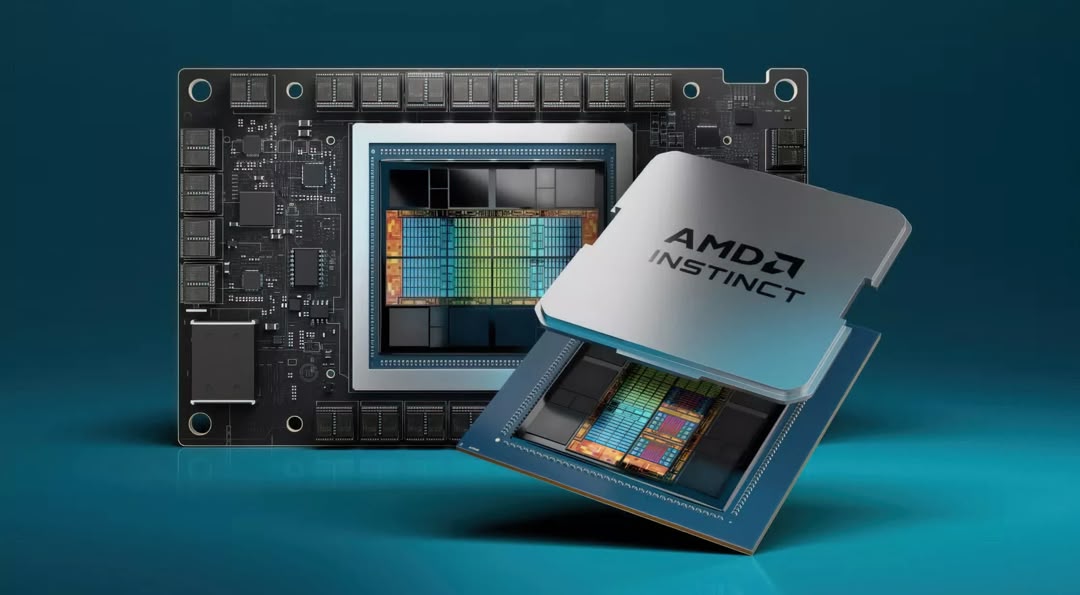
Nvidia remains the dominant supplier of many AI accelerators, but AMD has developed its own Instinct data-centre GPUs and software platforms to compete in the AI market.
AMD’s AI strategy includes high-performance graphics processors, server CPUs, networking products and software designed to help companies train and run AI models.
The company’s annual report says AMD has been developing an AI GPU roadmap and has introduced Instinct accelerators for data-centre workloads.
Main AMD product families
AMD’s main product categories include:
- Ryzen processors for desktops and laptops
- EPYC processors for servers and data centres
- Radeon graphics cards
- Instinct accelerators for artificial intelligence and high-performance computing
- Threadripper processors for workstations
- Semi-custom chips for gaming consoles
- Embedded processors for industrial and specialised systems
- Software tools for graphics and AI development
AMD’s position today
AMD is now a major rival to Intel in processors and a growing competitor to Nvidia in graphics and AI hardware.
Its strengths include competitive CPU performance, chiplet technology, server processors and a broad product portfolio.
The company also benefits from growing demand for data centres, gaming, cloud computing and artificial intelligence.
However, AMD faces intense competition. It must compete with Intel in CPUs, Nvidia in GPUs and AI accelerators, Apple and Qualcomm in specialised computing, and major technology companies designing their own chips.
The company’s future will depend on whether it can continue designing competitive chips while meeting the enormous demand created by artificial intelligence and modern computing.